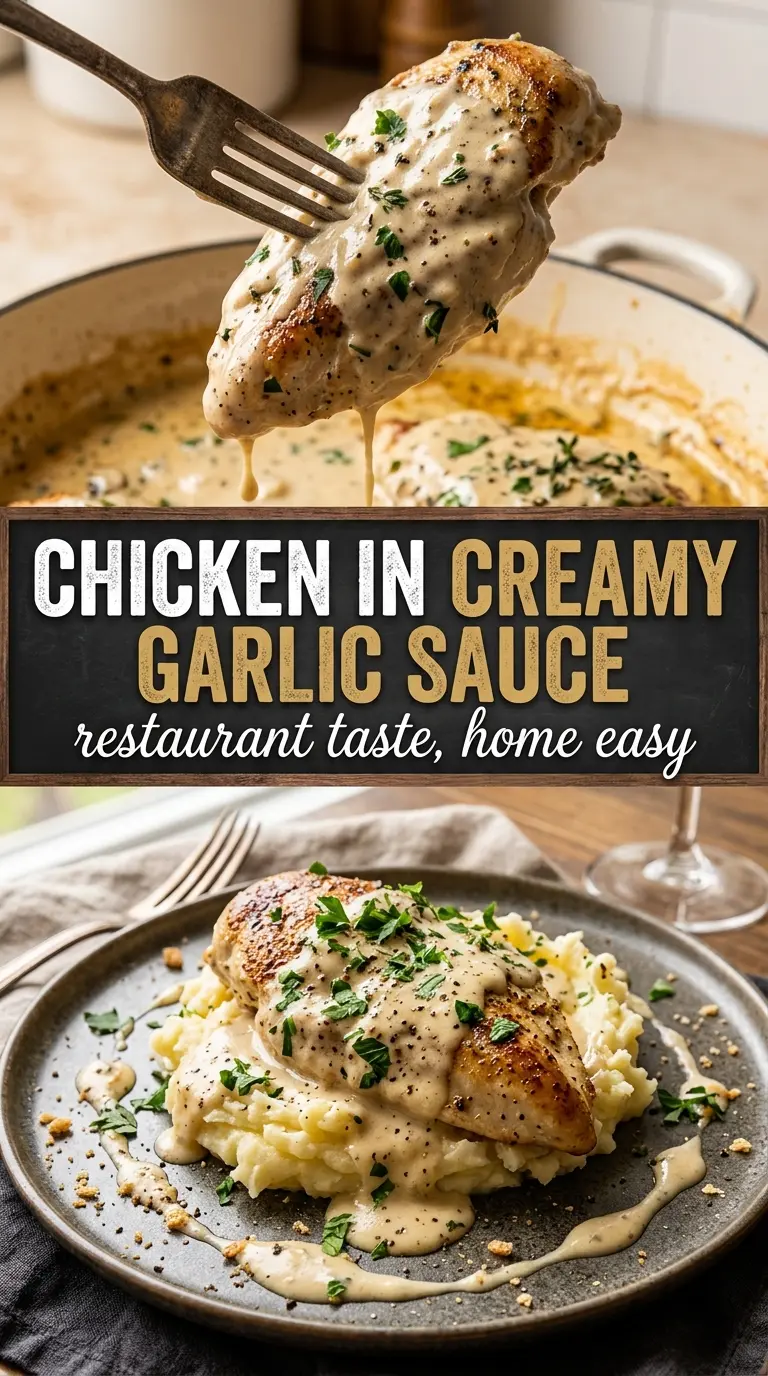
Juicy chicken breasts in creamy garlic sauce earn a permanent spot in the weeknight rotation because the sauce clings instead of running all over the plate. The chicken gets a deep golden sear first, then the same pan turns into a garlicky cream sauce with enough body to coat every bite. It tastes like you spent a lot longer at the stove than you did.
What makes this version work is the layering. The chicken browns in oil so the milk solids in the butter don’t scorch right away, then the garlic cooks just long enough to lose its raw bite without going bitter. A splash of white wine lifts the browned bits from the skillet, and the Parmesan finishes the sauce with salt and thickness so it settles into a silky spoonable texture instead of staying thin.
Below, I’ll walk you through the exact point where the sauce comes together, the one heat level that keeps the cream from splitting, and the easy swaps that still give you a rich skillet dinner.
The sauce thickened up exactly like you said, and the garlic stayed mellow instead of sharp. I served it over mashed potatoes and there wasn’t a drop left in the skillet.
Save these chicken breasts in creamy garlic sauce for the nights when you want a silky skillet dinner with a pan sauce that actually coats the chicken.
The Seared Chicken Needs Less Time Than the Sauce Does
The biggest mistake with chicken breasts is chasing color so long that the meat dries out before the sauce ever gets a chance to happen. Here, the chicken only needs enough time to turn deeply golden on the outside and reach 165°F in the center. Once it comes out of the pan, it rests while the garlic and cream take over.
That order matters. If you cook the sauce first, the skillet cools down and you lose the browned bits that give the sauce its depth. If you keep the chicken in the pan too early, the cream reduces around overcooked meat and the whole dish feels heavy instead of silky.
- Boneless skinless chicken breasts — Pound them lightly if one end is much thicker than the other. Even thickness is what keeps the thicker side from drying out before the center cooks through.
- Smoked paprika — This adds a little color and a subtle warmth under the cream. Sweet paprika works in a pinch, but you’ll lose that faint smoky edge that makes the chicken taste more roasted than plain sautéed.
- Dry white wine or chicken broth — Wine gives the sauce a sharper lift and helps cut the richness. Broth is the easy swap if you don’t keep wine around; use a good one, because this is the liquid that carries the browned flavor from the pan into the sauce.
What the Garlic, Cream, and Parmesan Are Each Doing Here
- Garlic — Eight cloves sounds bold, and it is, but the minute or two in butter softens the sharp edges. Mince it finely so it perfumes the sauce evenly; large pieces can brown too fast and turn bitter before the cream goes in.
- Heavy cream — This is what gives the sauce its body and that glossy finish. Half-and-half won’t behave the same way and can break more easily when the Parmesan melts in, so use the full-fat cream if you want the sauce to stay smooth.
- Parmesan — Grate it fresh if you can. Pre-grated cheese often has anti-caking agents that make the sauce grainy, especially once it hits heat.
- Cayenne and Italian seasoning — These don’t take over the dish; they keep the sauce from tasting flat. The cayenne adds a quiet back-of-the-throat warmth, and the herbs make the cream taste layered instead of one-note.
Building the Sauce in the Same Pan Without Breaking It
Getting the Chicken Out at the Right Moment
Season the chicken generously, then sear it in hot olive oil until the outside is golden and the center reaches 165°F. If the pan starts smoking hard, the heat is too high and the outside will darken before the inside cooks through. Pull the chicken out as soon as it’s done; the carryover heat will finish the last little bit while it rests.
Blooming the Garlic in Butter
Lower the heat before you add the butter and garlic. Garlic burns fast in a hot skillet, and burnt garlic makes the whole sauce taste harsh. Stir constantly and stop when it smells fragrant and just starts to turn pale gold at the edges.
Turning the Brown Bits Into Sauce
Add the wine or broth and scrape the bottom of the pan well. Those browned spots are concentrated chicken flavor, and they dissolve into the liquid almost immediately. Let it bubble for a minute or two so the raw alcohol cooks off if you’re using wine, then stir in the cream and keep the simmer gentle.
Finishing With Cheese and Returning the Chicken
Once the sauce looks slightly thicker and coats the back of a spoon, add the Parmesan, Italian seasoning, and cayenne. Keep the heat low here. High heat can make the cheese seize and the sauce turn grainy. Put the chicken back in, spoon the sauce over the top, and let everything warm together for a minute so the breasts reabsorb some of that sauce before serving.
How to Adapt This Skillet Dinner Without Losing the Creamy Texture
Use chicken thighs instead of breasts
Boneless thighs stay juicier and forgive a little extra time in the pan. They bring a richer flavor, though the dish will look slightly darker and a bit less lean than the breast version.
Make it dairy-free with coconut cream
Full-fat coconut cream can stand in for the heavy cream, but the sauce will taste a little sweeter and lose the classic Parmesan finish. Skip the cheese or use a dairy-free Parmesan alternative, and keep the simmer gentle so the coconut doesn’t separate.
Use broth only for a lighter sauce
If you want less richness, use chicken broth instead of wine and lean on the Parmesan for body. The sauce won’t be as plush, but it will still coat the chicken if you simmer it long enough to reduce.
Storage and Reheating
- Refrigerator: Store for up to 3 days. The sauce will thicken as it chills.
- Freezer: It’s not the best freezer meal. Cream sauces can separate after thawing, so I don’t recommend freezing this one.
- Reheating: Warm it slowly in a skillet over low heat with a splash of broth or cream. Fast microwave reheating can make the sauce oily and the chicken rubbery.
Answers to the Questions Worth Asking

Chicken Breasts in Creamy Garlic Sauce
Ingredients
Equipment
Method
- Season the boneless skinless chicken breasts with salt, pepper, and smoked paprika to taste. Heat olive oil in a large cast iron skillet over medium-high heat and sear until golden, 5–6 minutes per side, until the internal temperature reaches 165°F; remove to a plate.
- Melt butter in the same pan over medium heat and add minced garlic, cooking 2 minutes while stirring constantly, until fragrant and starting to turn golden.
- Deglaze the pan with dry white wine (or chicken broth) and cook 2 minutes, stirring to lift browned bits from the bottom.
- Stir in heavy cream and bring the mixture to a simmer over medium heat.
- Add Parmesan cheese, Italian seasoning, and cayenne pepper, then simmer 4–5 minutes until the sauce is thick and glossy.
- Return the seared chicken breasts to the pan and spoon the garlic cream sauce over each breast so it pools around the base of the meat.
- Garnish with fresh thyme and fresh parsley for a bright finish right before serving.