Golden seared chicken breasts tucked into a sun-dried tomato cream sauce earn their reputation fast. The chicken stays juicy, the sauce turns glossy and spoon-coating, and the whole pan smells like garlic, Parmesan, and basil in the best possible way. It’s the kind of dinner that looks like you fussed all afternoon, even though the stove time is short.
What makes this version work is the order. The chicken gets a hard sear first so it brings flavor into the sauce, then the same pan picks up every browned bit with broth before the cream goes in. That keeps the sauce from tasting flat. The sun-dried tomatoes add sweetness and a little chew, while Parmesan thickens the sauce without making it heavy if you pull it off the heat before the cheese goes in too hard.
Below you’ll find the little details that keep the sauce smooth, plus the swaps I’d use when I want to stretch it, lighten it up, or serve it over something besides pasta.
The sauce thickened up beautifully and never broke, and the sun-dried tomatoes gave it that rich, restaurant-style taste. My husband went back for seconds before I’d even sat down.
Save this Marry Me Chicken recipe for a creamy skillet dinner with golden seared chicken and that glossy sun-dried tomato sauce.
The Reason the Sauce Stays Creamy Instead of Grainy
The biggest mistake with this dish is rushing the sauce once the dairy goes in. High heat can make the cream separate and it can turn the Parmesan gritty. Keep the simmer gentle and steady. You want tiny bubbles around the edge of the pan, not a hard boil.
The second part that matters is using the browned chicken drippings in the same skillet. That fond dissolves into the broth and gives the sauce depth that plain cream can’t fake. If the pan looks dry after searing, that’s fine. The broth loosens everything up and starts the sauce with built-in flavor.
- The chicken should be seared until the outside is deeply golden before it ever goes back into the sauce. Pale chicken makes a pale sauce.
- Parmesan thickens as it melts, but it needs low heat. Add it when the sauce is already hot, not boiling.
- Sun-dried tomatoes bring both sweetness and acidity, which keeps the cream from tasting one-note.
What Each Ingredient Is Actually Doing in This Dish
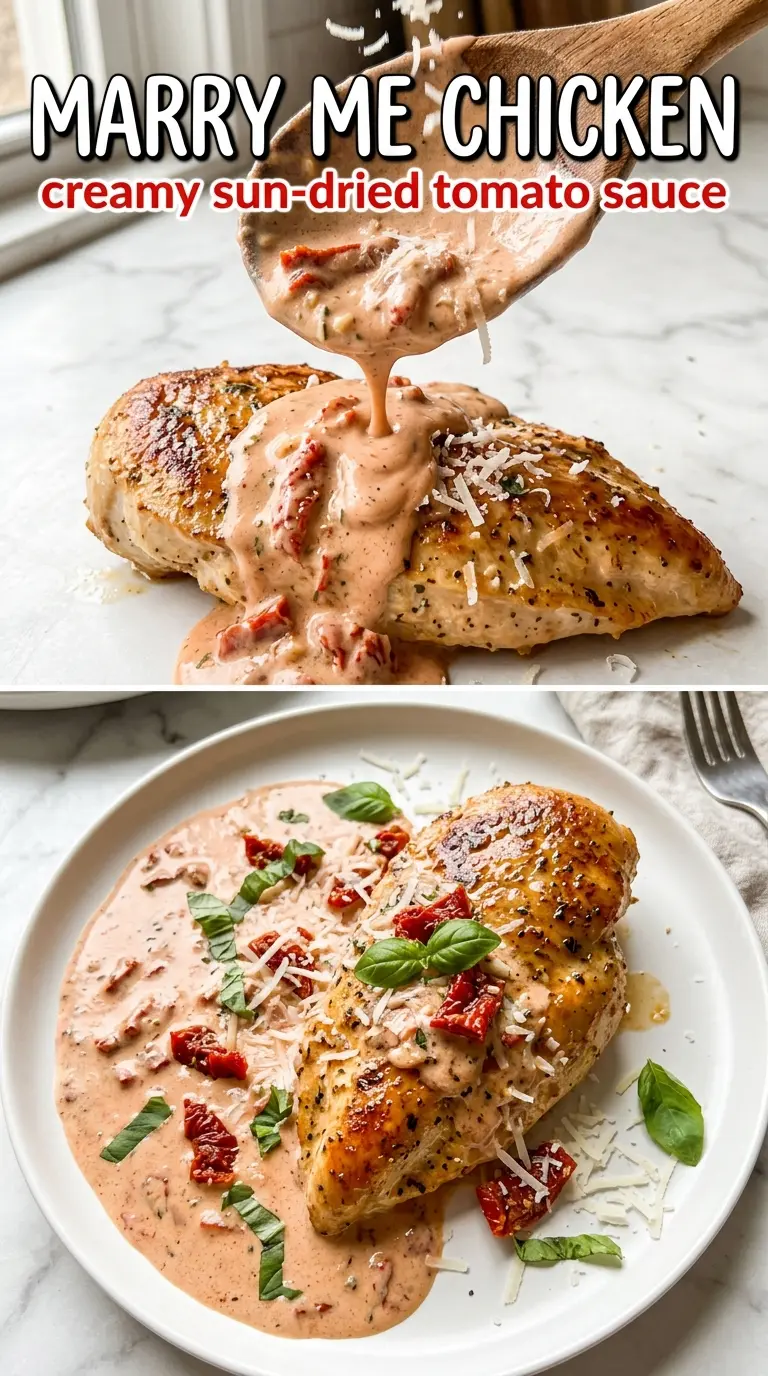
- Chicken breasts — These give you the classic Marry Me Chicken look and plenty of surface area for browning. Pound them lightly if one side is much thicker so they cook evenly and stay juicy.
- Sun-dried tomatoes in oil — The oil-packed kind are softer and more flavorful than dry-packed tomatoes. Drain them, then slice them so they melt into the sauce instead of sitting in big chewy chunks.
- Chicken broth — This is what loosens the browned bits from the pan and keeps the cream sauce from becoming too heavy. Water works in a pinch, but the sauce loses depth.
- Heavy cream — This is what gives the sauce its body and that silky finish. Half-and-half can work, but the sauce will be thinner and more likely to split if you let it boil.
- Parmesan — Freshly grated Parmesan melts cleaner than the pre-shredded stuff, which often has anti-caking agents. If you use the packaged kind, expect a slightly less smooth sauce.
- Red pepper flakes — They don’t make the dish spicy-hot; they wake up the cream and cut through the richness. Add a little more only if you want a noticeable kick.
Getting the Sear and Sauce in the Right Order
Seasoning the Chicken
Season both sides generously before the skillet heats up. Salt needs a few minutes to start working into the meat, and the garlic powder, Italian seasoning, and paprika build a more layered crust when they hit hot oil. If the seasoning looks damp, that’s normal. It will dry out and darken in the pan.
Building the Browning
Heat the oil until it shimmers, then lay the chicken in without crowding the pan. It should hiss immediately. If the chicken sticks when you try to move it, give it another minute; once it browns, it releases on its own. Pull it when it reaches 165°F and the crust is deep gold, not patchy tan.
Turning the Pan Drippings Into Sauce
Cook the garlic and tomatoes just long enough for the garlic to smell fragrant, about a minute, then add the broth and scrape the bottom of the pan hard. Those dark bits are where the flavor lives. Once the cream goes in, lower the heat and keep the sauce at a gentle simmer. If it starts bubbling fast, the cheese can seize and the sauce loses its smooth finish.
Finishing Without Overcooking
Return the chicken to the skillet and spoon sauce over the top so it warms through without drying out. Two minutes is enough. You’re not cooking it again from raw; you’re finishing it in the sauce. Basil goes on right at the end so it stays bright and doesn’t turn muddy.
How to Adapt This for a Lighter Skillet Dinner or a Bigger Crowd
Dairy-Free Version
Use full-fat canned coconut milk in place of the cream and skip the Parmesan unless you have a dairy-free version that melts well. The sauce will taste a little less sharp and a little more rounded, but it still gets thick and glossy if you keep the simmer gentle.
Gluten-Free Serving Ideas
The chicken and sauce are naturally gluten-free, so the main job is choosing what to serve underneath. Mashed potatoes, rice, or gluten-free pasta all work. If you’re using a store-bought broth, check the label because some brands sneak in wheat-based flavoring.
Chicken Thigh Swap
Boneless skinless thighs work well and stay even juicier, but they need a few more minutes in the pan and they won’t slice into neat breast-style portions. The sauce still tastes rich, but the finished dish feels a little more rustic and forgiving.
Storage and Reheating
- Refrigerator: Store leftovers in an airtight container for up to 3 days. The sauce will thicken as it chills.
- Freezer: It freezes, but cream sauces can separate a little after thawing. Freeze in a tightly sealed container for up to 1 month if needed, then expect to whisk it back together.
- Reheating: Warm it gently on the stove over low heat with a splash of broth or cream. Microwaving on high is the fastest way to overcook the chicken and break the sauce.
Answers to the Questions Worth Asking
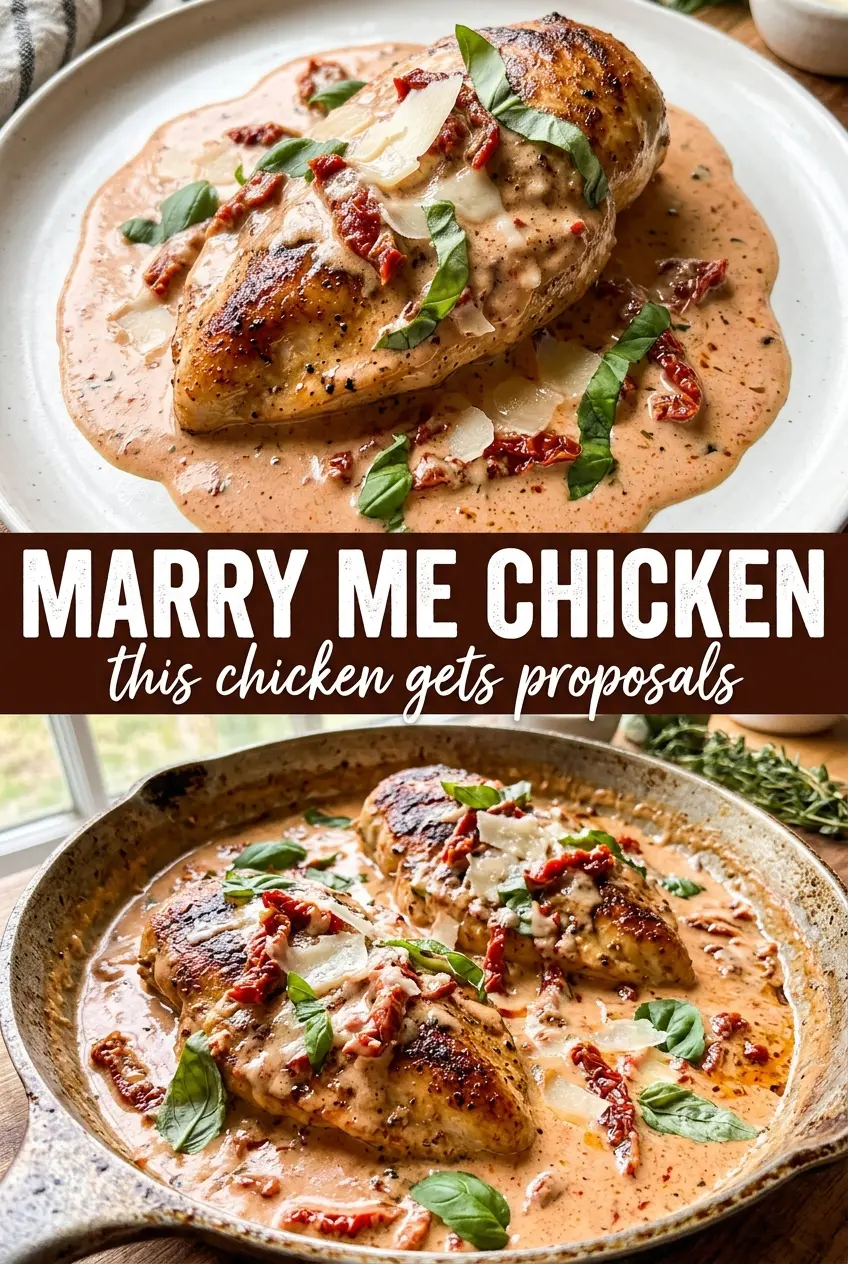
Marry Me Chicken
Ingredients
Equipment
Method
- Season the chicken breasts generously on both sides with salt, pepper, garlic powder, Italian seasoning, and smoked paprika.
- Heat the olive oil in a large cast iron skillet over medium-high heat.
- Sear the chicken for 5-6 minutes per side until golden, then confirm the internal temperature reaches 165°F; remove the chicken to a plate.
- Cook the garlic and sun-dried tomatoes in the same pan for 1 minute.
- Pour in the chicken broth and deglaze, scraping up browned bits from the pan.
- Stir in the heavy cream, Parmesan, dried Italian seasoning, and red pepper flakes, then simmer for 4-5 minutes until the sauce thickens.
- Return the chicken to the pan and spoon the sauce over each breast, then simmer for 2 more minutes.
- Garnish with fresh basil and serve over pasta or mashed potatoes.