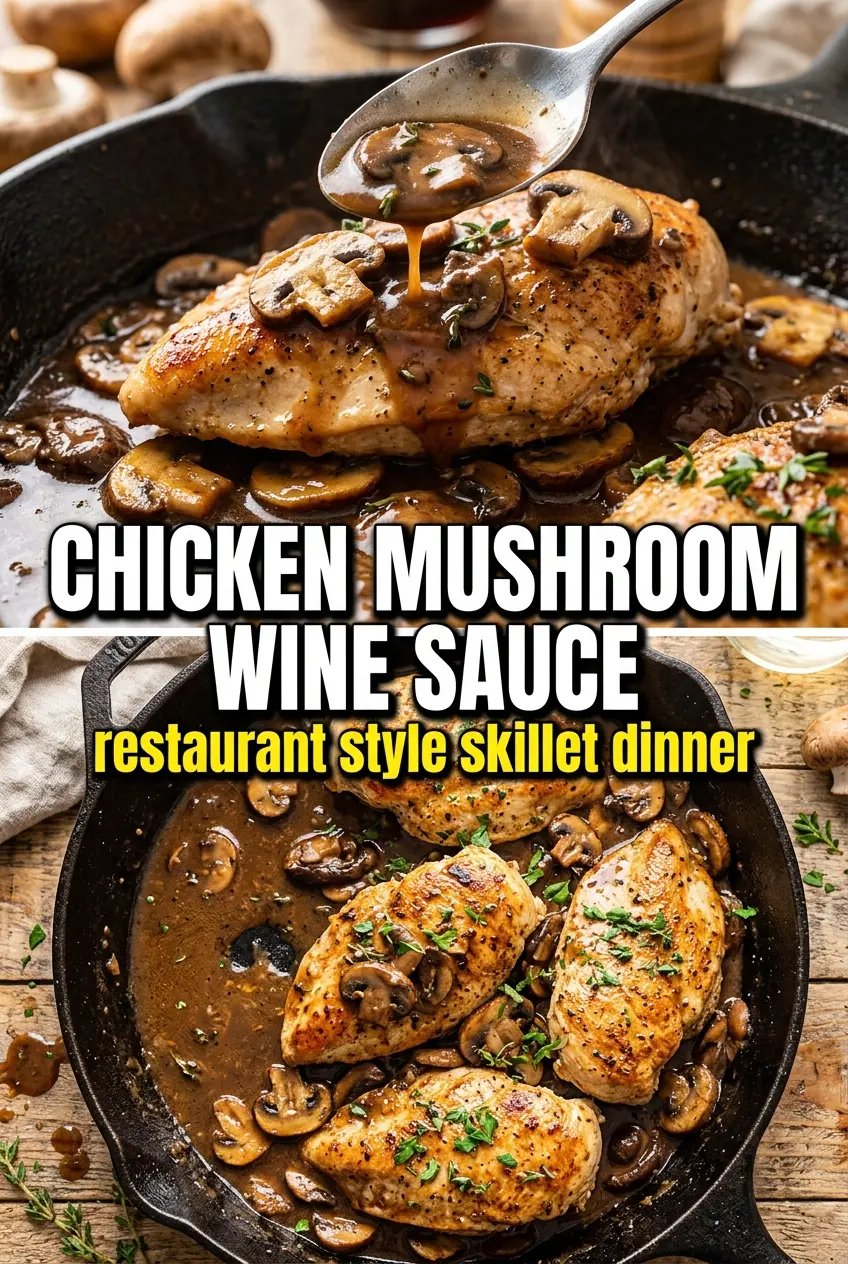
Golden chicken breasts and a deep mushroom wine sauce make this skillet dinner taste like it came from a much fancier kitchen than the one you actually cooked it in. The chicken stays juicy because it’s seared first and finished in the sauce only long enough to warm through, while the mushrooms and wine build a glossy pan sauce that clings to every bite. It’s the kind of meal that feels composed and elegant, but still lands on the table in under 40 minutes.
The key is letting the mushrooms brown before the garlic goes in. That extra color gives the sauce its depth, especially once the wine hits the pan and loosens all those caramelized bits from the bottom. Dijon and cream round everything out without turning the sauce heavy, and a little thyme keeps the whole dish tasting bright instead of flat. If you’ve ever had a wine sauce taste thin or sharp, this version fixes that with a proper simmer and just enough fat to bring it together.
Below you’ll find the trick to getting a good sear without overcooking the chicken, plus a few swaps that still keep the sauce silky and balanced.
The sauce thickened up beautifully and coated the chicken instead of pooling on the plate. I used red wine and the mushrooms turned out deep and savory, not watery at all.
Like this skillet chicken and mushroom wine sauce? Save it to Pinterest for the nights when you want a glossy pan sauce and tender chicken without extra fuss.
The Sear That Keeps the Chicken Juicy While the Sauce Builds
The biggest mistake with skillet chicken is crowding the pan or moving the breasts too early. You want a hard sear on the first side so the chicken releases on its own and carries real color into the sauce later. If the pan is too cool, the chicken will steam and the sauce will never taste as rich because you’ll miss those browned bits.
- Dry chicken matters — Pat the breasts dry before seasoning. Moisture on the surface blocks browning, and browned chicken is what gives this dish its depth.
- Medium-high heat is the sweet spot — Hot enough to color the chicken, but not so hot that the outside scorches before the center cooks through.
- Let the chicken rest out of the pan — Pull it once it reaches 165°F and finish the sauce separately. If you leave it in too long, the chicken turns chalky while the sauce reduces.
What Each Ingredient Is Actually Doing in This Sauce

- Cremini mushrooms — These bring the earthy, meaty base of the sauce. White button mushrooms will work, but cremini give you a deeper flavor once they brown.
- Dry red wine — This adds body and acidity, and it needs to simmer long enough to lose the raw alcohol edge. White wine works too, but the sauce will taste lighter and a little brighter.
- Heavy cream — It softens the wine and turns the sauce silky. Half-and-half can be used in a pinch, but the sauce will be thinner and less stable.
- Dijon mustard — Just a teaspoon, but it sharpens everything and helps the cream taste balanced instead of flat. Skip it and the sauce loses some of its lift.
- Fresh thyme — Dried thyme seasons the chicken, but fresh thyme in the sauce keeps the final dish from tasting heavy. Strip the leaves from the stems so they melt into the sauce instead of floating around like garnish-only decoration.
Building the Wine Sauce Without Losing the Pan Flavor
Brown the Chicken First
Season the chicken generously, then sear it in olive oil until the surface is deeply golden and the center hits 165°F. Don’t cut the time short just because the outside looks done; underseared chicken leaves the sauce flat. Once it’s ready, transfer it to a plate and leave every browned bit in the skillet.
Cook the Mushrooms Until They Take on Color
Add the butter and mushrooms to the same pan and let them sit long enough to release their moisture, then cook on until that liquid cooks off and the edges darken. If the mushrooms are pale and wet, the sauce will taste thin. Garlic goes in only after the mushrooms are browned, because garlic burns fast and turns bitter before the mushrooms have a chance to finish.
Deglaze and Reduce
Pour in the wine and scrape the pan immediately. That browned residue is concentrated flavor, and it should dissolve into the liquid as the wine simmers for about 3 minutes. If the wine still smells sharp, keep it on the heat a little longer; you want the edge cooked off before the broth and cream go in.
Finish with Cream and Bring It Together
Add the broth, cream, Dijon, and thyme, then simmer until the sauce thickens enough to coat a spoon. Keep the heat gentle once the cream is in; high heat can make the sauce split or look grainy. Return the chicken to the pan and spoon the sauce over the top so it warms through without overcooking.
Three Ways to Adapt This Skillet Dinner
Make It Dairy-Free
Swap the butter for more olive oil and use full-fat coconut cream or an unsweetened dairy-free cooking cream. The sauce won’t taste quite as rich or classic, but it will still thicken well if you keep the simmer gentle.
Use White Wine for a Lighter Finish
White wine makes the sauce brighter and a little less earthy, which works well if you want the thyme and mushrooms to stay in the foreground. It’s a good swap if you only have Sauvignon Blanc or Pinot Grigio on hand.
Make It Gluten-Free
This recipe is naturally gluten-free as written, which is one reason I like it for a last-minute dinner. Just check that your broth and Dijon are certified gluten-free if you’re cooking for someone sensitive.
Stretch It for More Servings
Slice the cooked chicken before returning it to the skillet and add a few extra mushrooms and another splash of broth. The sauce will stretch farther without tasting diluted, and it’s easier to serve over rice, mashed potatoes, or noodles.
Storage and Reheating
- Refrigerator: Store leftovers in an airtight container for up to 3 days. The sauce will thicken as it chills.
- Freezer: The sauce can separate a little after freezing, so I don’t recommend freezing the finished dish if you want the best texture. If you do freeze it, thaw overnight and rewarm gently.
- Reheating: Reheat slowly on the stove over low heat with a splash of broth or cream. High heat is the fastest way to break the sauce and dry out the chicken.